

Why I Built Pixel Parlour
What raising the price, asking for a 10-minute application, and leaving calls unstructured taught me about building a community.
The pattern I kept seeing
Since 2019, I have helped run one of the largest design WhatsApp groups in Sri Lanka.
When COVID-19 arrived, online communities suddenly became more active. Clubhouse exploded. New design groups appeared everywhere. People wanted places to talk, learn, and meet others in the industry.
Most of those spaces followed the same pattern. They started with energy, then slowly went quiet. People joined, introduced themselves, and disappeared.
I kept wondering why that happened.
The problem did not seem to be a lack of interest. Plenty of people wanted a design community. The problem was that joining one required almost nothing, and staying involved was rarely treated as a responsibility.
Pixel Parlour became my attempt to design that differently.
Why I added friction
I wanted Pixel Parlour to be self-sustaining, but I also knew it could not be built around collecting as many members as possible.
It needed people who wanted to participate.
I started by charging $1 to join. People still signed up and disappeared, so I moved it to $3. The same thing happened. Today membership is LKR 990 a month.
Each increase came from ghosting, not from needing the money. A price that means something makes the decision to join a real one.
The application works in the same way. It takes around 10 minutes to complete, and that is intentional. It gives people enough time to explain why they want to join and what they hope to contribute. It also gives them a first real feel for how we talk and what we value, before they pay anything.
Neither the price nor the application guarantees that someone will participate. They simply introduce a small moment of commitment before entering the community.
For Pixel Parlour, that friction has been useful.
What happened when the agenda disappeared
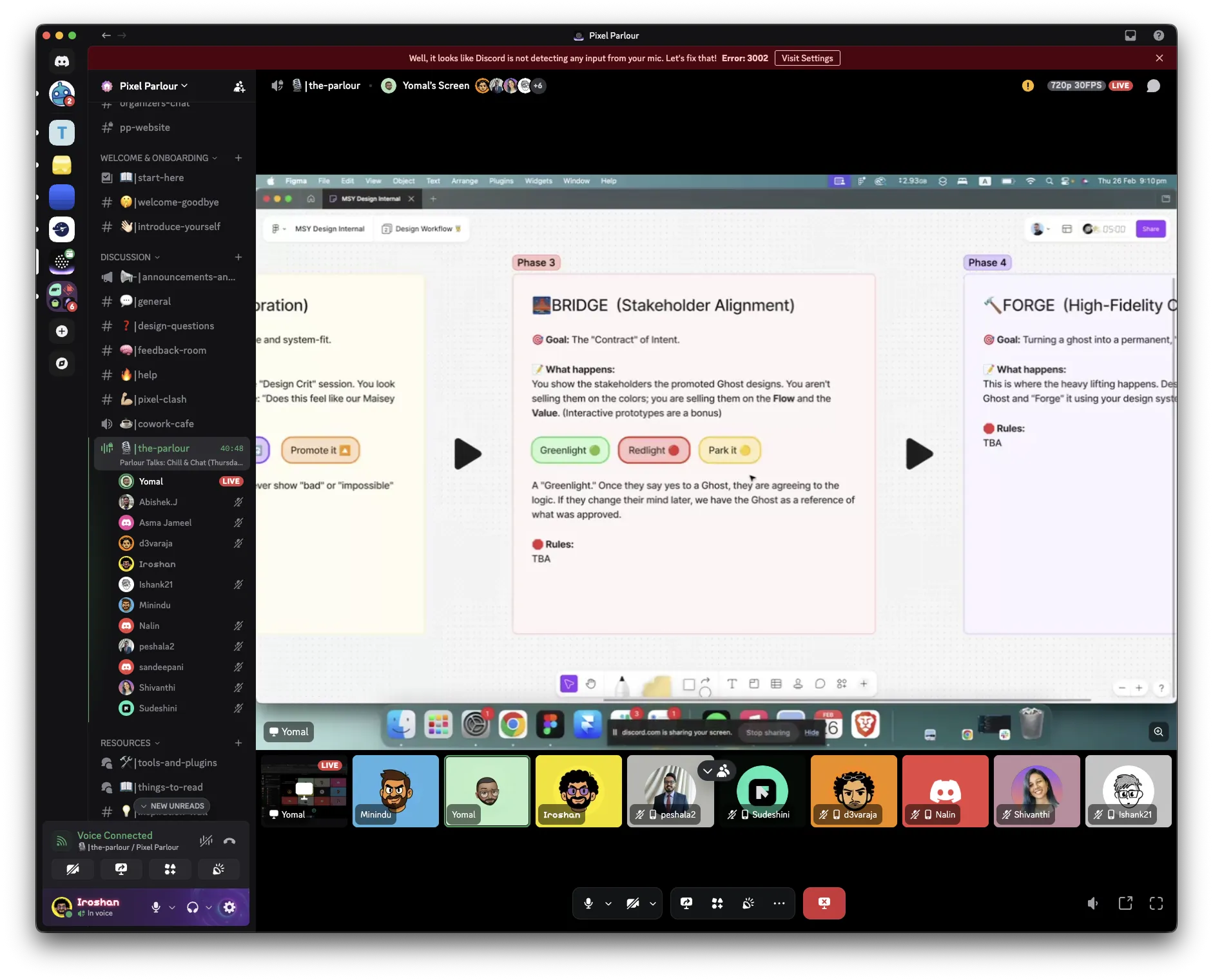
We started small in late 2024. It was a Discord server, a few people I already knew, and bi-weekly calls without a forced agenda.
Those calls became more thoughtful than I expected.
We would start at 8 p.m. and sometimes stay until 3 a.m., talking about problems inside Sri Lankan design companies, how teams actually worked, and which parts of the design process broke down under real constraints.
They were not structured lessons. They were conversations between people who cared enough to stay.
Those calls are now weekly. Every Saturday evening we host Chill and Chat, and we are past episode 58. The format has barely changed.
During one of our first meetups, Hasanga Abeyaratne said something I kept coming back to:
“If we’re doing meetups, let’s make them about designers having a good time. Not another webinar. Not structured lessons. Just coffee and conversations. Let people actually connect.”
That became an important reference point for what Pixel Parlour should feel like.
From online calls to meeting in person
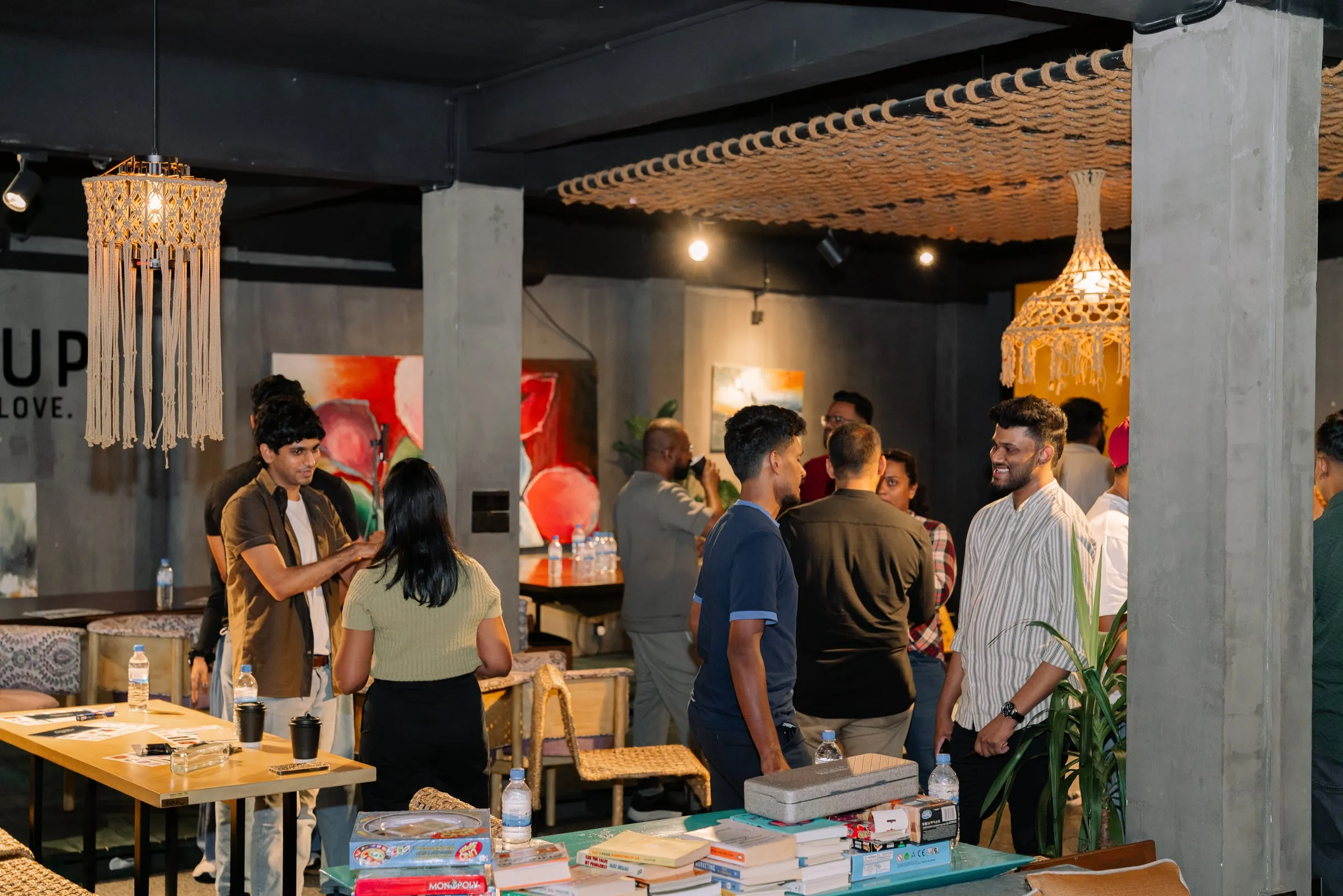
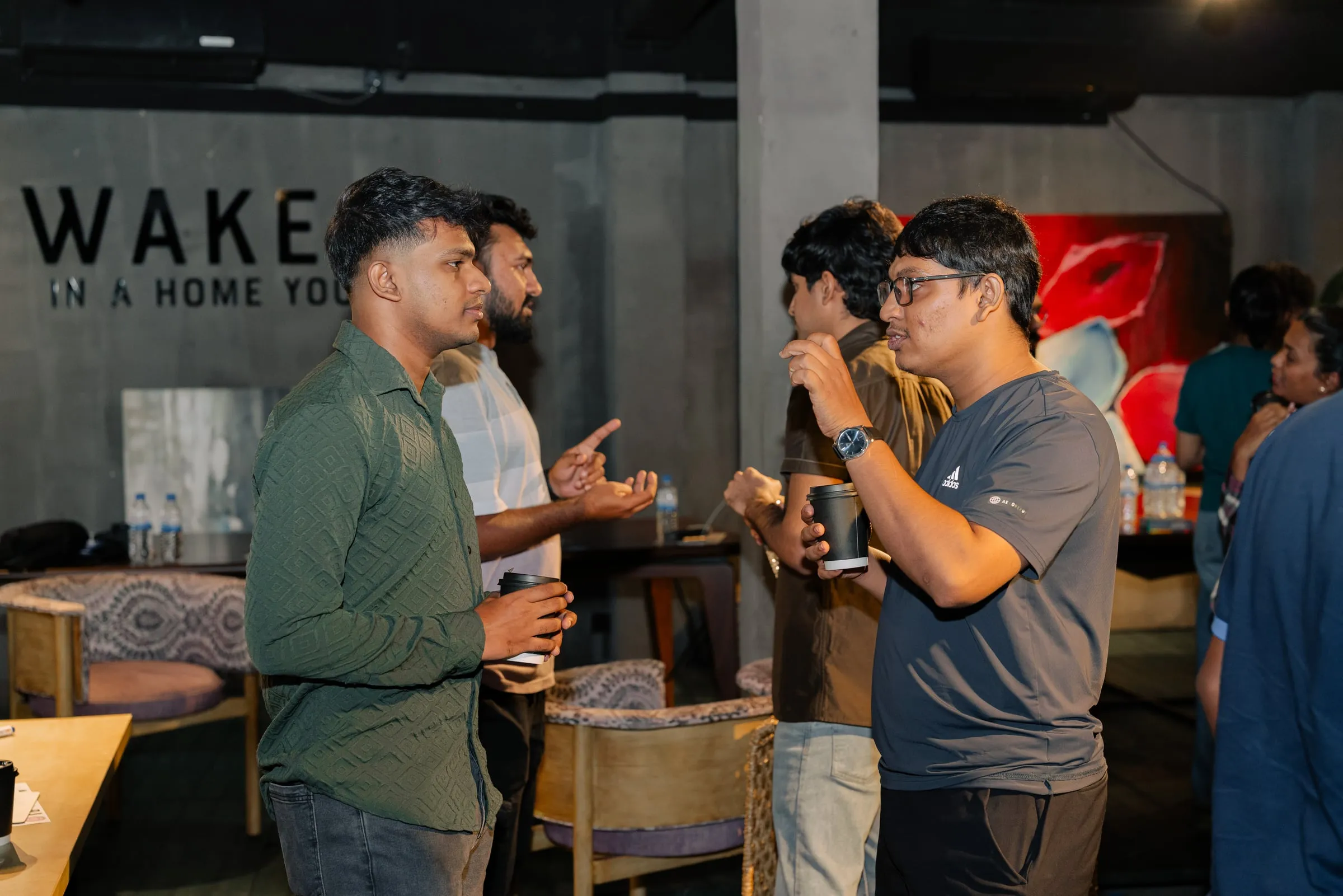
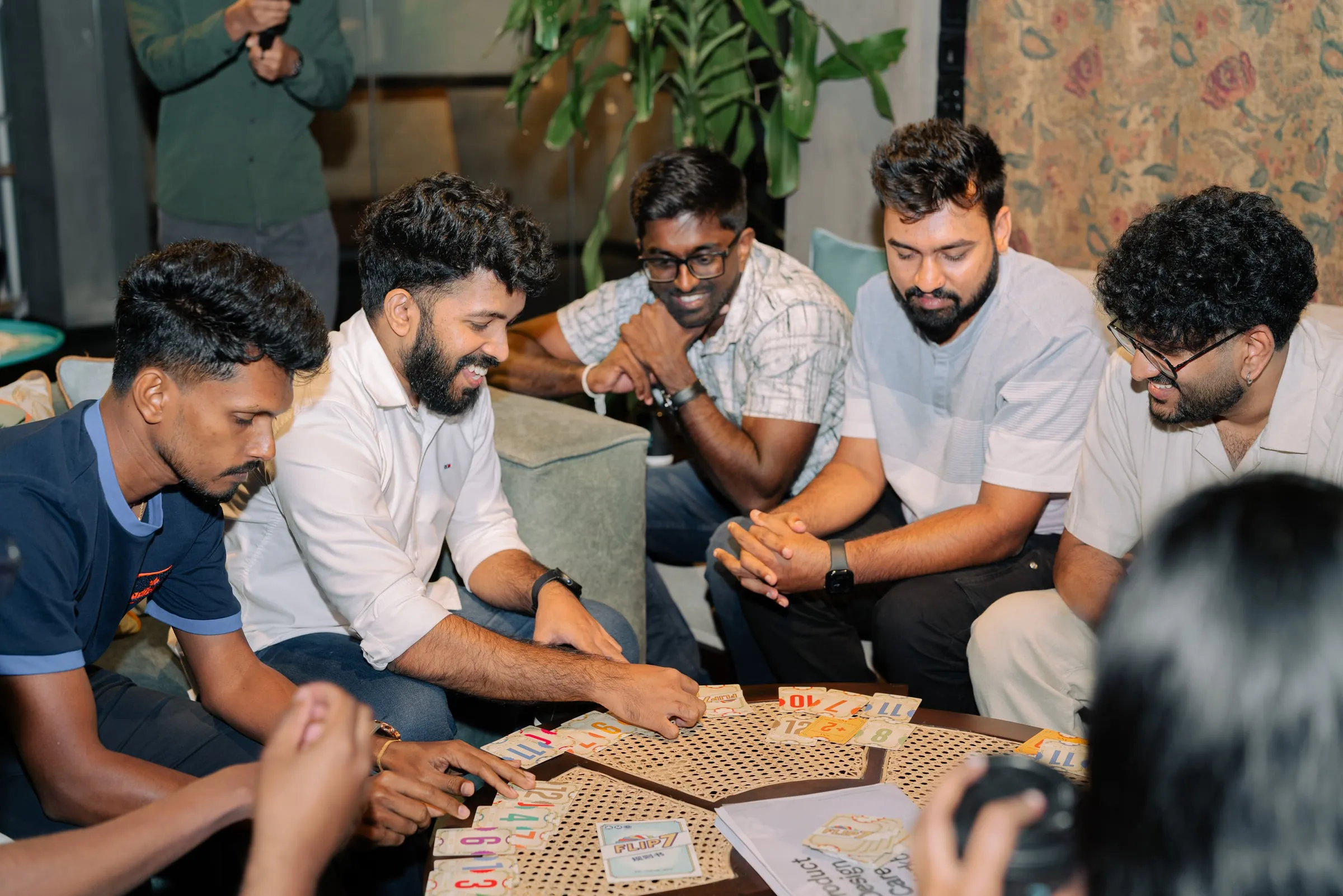
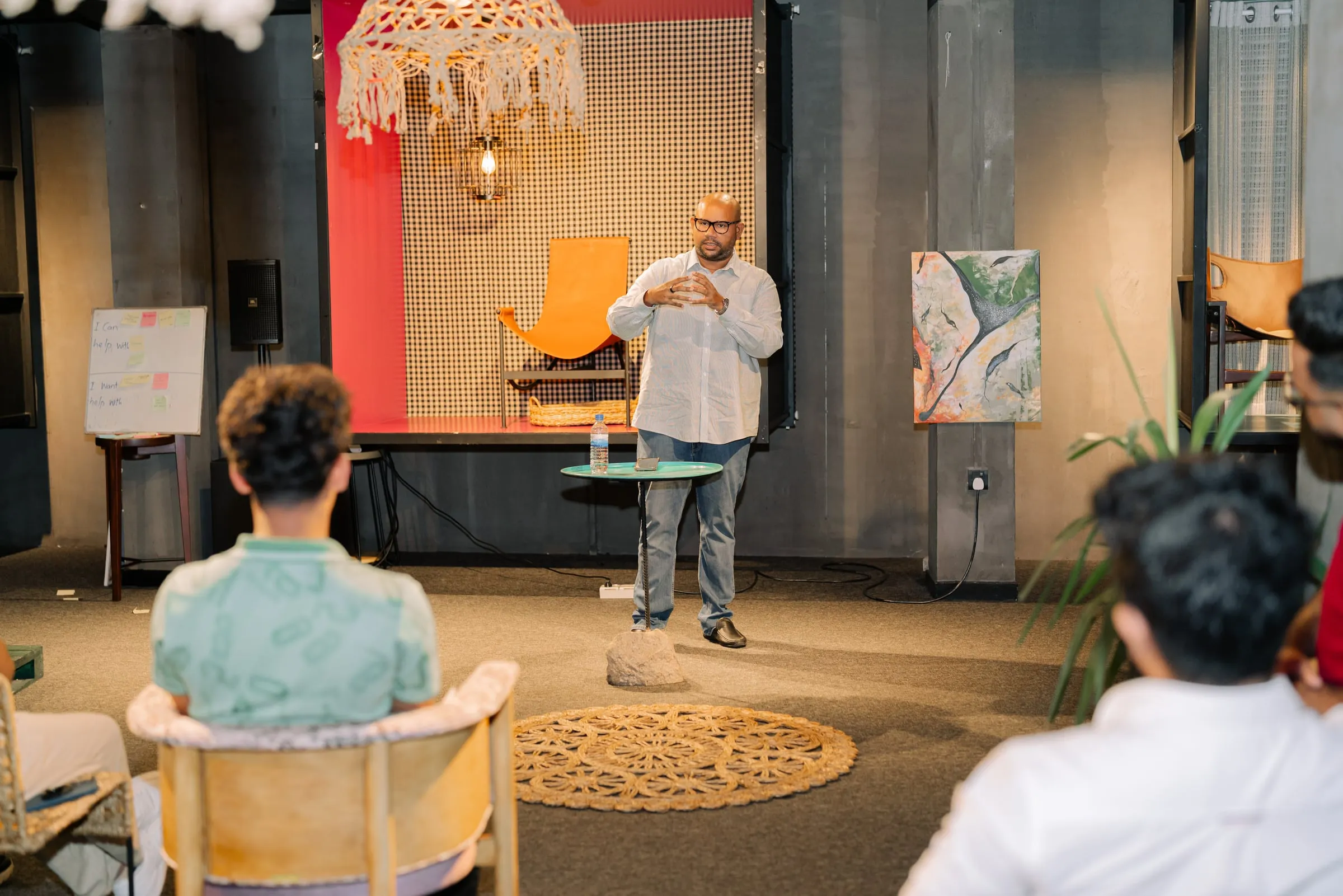
Our first meetup of 2026 followed the same principle.
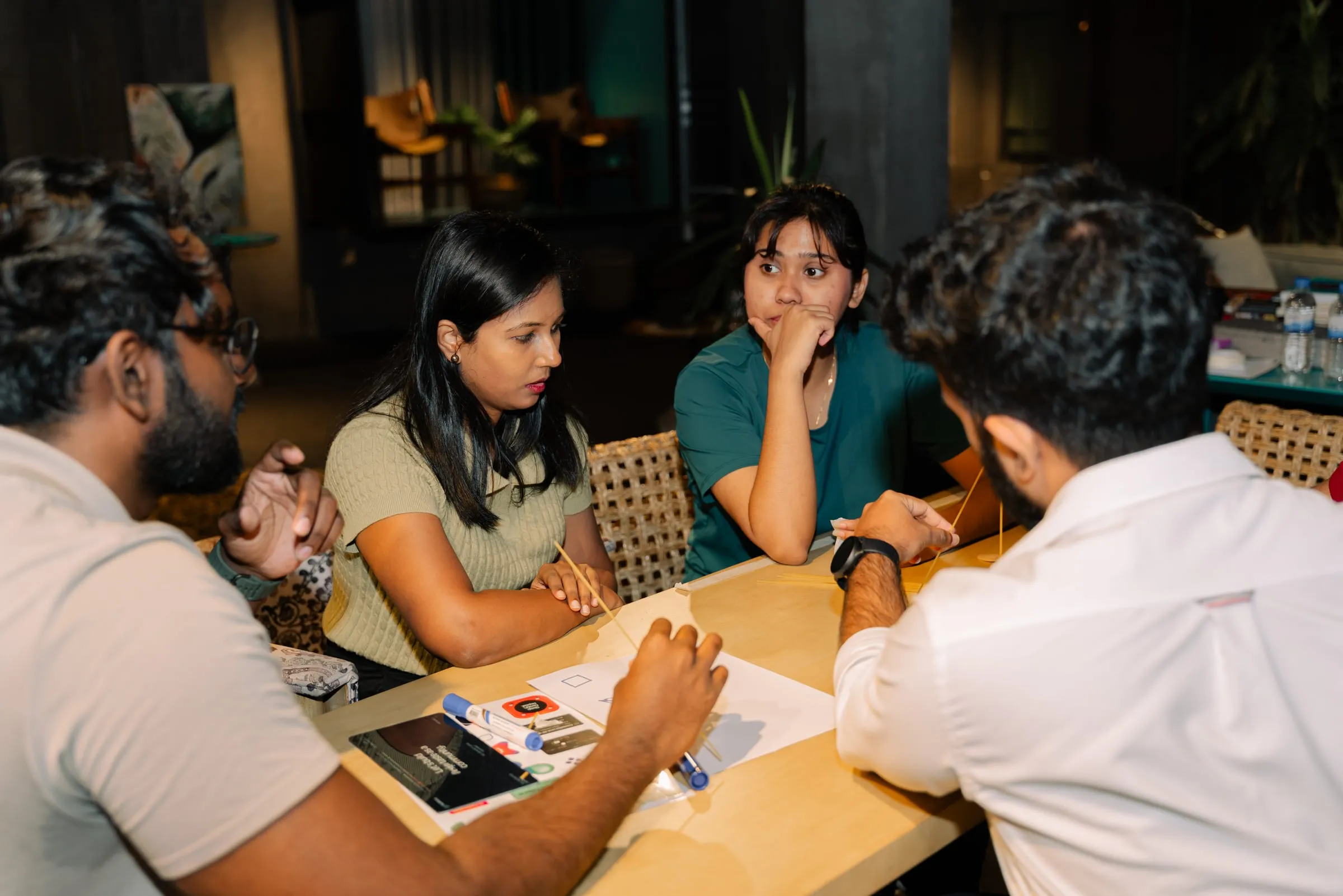
There were no slides and no forced agenda. Designers showed up, spoke to people they had not met before, played games, and spent time together without needing to turn every conversation into a lesson.
The most useful feedback was simple: people wanted more opportunities like it.
It also confirmed something I had suspected for a while. In Sri Lanka, most designers do not live on Discord. Online conversations stay quiet until people have met. Once they have shared a table, they talk more freely online too.
That is why 2026 is about meeting in person first. The digital side follows the comfort people build in the room.
A paid membership does not automatically make a community active. We have had quiet months when very little happened beyond a few calls. The meaningful part was that people stayed through those periods.
Members continued joining sessions, sharing what they knew, and helping other people think through their work. They did not treat a quiet month as a reason to leave.
That told me more about the community than a large membership number would have.
Skill level is not the filter
Pixel Parlour currently has around 50 members.
Some are junior designers learning the fundamentals. Others are senior designers looking for peers with whom they can discuss complex product and organisational problems.
Skill level is not what holds the group together. Intent is.
Our sessions have covered design workflows, productivity tools, investing, and how designers can work with developers without making the relationship difficult. The community is design-led, but the conversations are not limited to design tools or interface trends.
Designers need to understand the wider environment around their work. That includes business, communication, technology, money, and the people responsible for turning an idea into a working product.
The goal is designers with taste who also know how to ship. Static Figma files are only part of the job.
Making the unfinished work easier to share
In conversations with designers across Sri Lanka, I noticed how often people were figuring things out alone.
Many did not know designers outside their immediate workplace. They had few places to share early work without feeling that it needed to be polished first. Asking for feedback could feel more like a performance than a useful part of the process.
Pixel Parlour is meant to make that unfinished stage easier to share.
It should be a place where someone can bring the messy middle of a project, explain what is not working, and get an honest response from people who understand the problem.
We built small habits around it. Every Monday there is a thread where we break down a UX case study together. Every two weeks there is a design challenge. Neither asks for polished work. Both ask you to show up and think out loud.
The confidence that comes from a community is not limited to presenting better work. It also comes from knowing who to ask, how to talk through a difficult decision, and where to find people who have dealt with something similar.
Where Pixel Parlour goes next
For the rest of this year, we are planning more meetups, learning sessions, and opportunities for members to share what they know.
I cannot organise all of it alone. Pixel Parlour becomes more useful when members help shape the sessions, bring questions, share experiences, and create the kind of room they would want to return to.
To everyone who has stayed with us from the beginning, thank you. Your participation is the reason this community still exists.
Interested in joining?
Pixel Parlour is for designers in Sri Lanka who want to participate in a small, active community. You do not need to be a senior designer, but you should be willing to show up, share what you know, ask thoughtful questions, and help other members when you can.
Membership is LKR 990 a month and starts with a short application.
If you would like to experience an event before applying, you can see upcoming Pixel Parlour events.
Interested in hosting a session, helping organise a meetup, or collaborating with the community? Send me an email.